
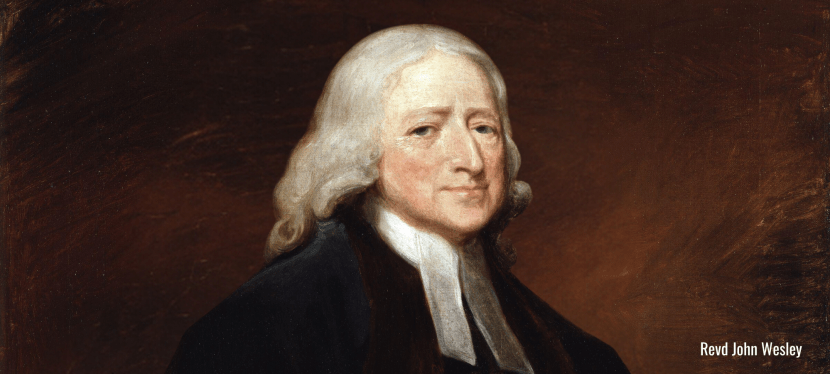
Methodists trace their roots to the early church. Maintaining an apostolic faith, Methodists emerge as a unique and distinctive Christian tradition in 18th century England. The Reverend Mr. John Wesley, a priest in the Church of England, sought to reform the church and reinvigorate Christians to greater focus on Christian living through spreading God’s love and serving the poor and marginalized. John Wesley along with his brother Charles Wesley, friend George Whitefield, and many others began to preach in open areas across Great Britain as well as organize Bible groups who studied Scripture and served the poor.
While the early Methodists did not object to the doctrine or polity of the English church, separation eventually ensued in the late 18th century with the establishment of the Methodist Episcopal Church in 1784 in the newly-formed United States of America. Methodists in Great Britain formed their own church after John Wesley’s death in 1791.
Committed to ‘spreading Scriptural holiness across the land’ as John Wesley described, Methodists work in mission and evangelism led them to all parts of the world. Today, there are 80 million Methodists in over 138 countries and on every inhabited continent.
What do Methodists believe?
Methodists share a common heritage with all Christians. We affirm the Christian faith as expressed in the Apostles’ Creed and the Nicene Creed.
Methodist also emphasize:
- Grace is central to our understanding of Christian faith and life. Grace can be defined as the love and mercy given to us by God because God wants us to have it, not because of anything we have done to earn it. We read in the Letter to the Ephesians: “For by grace you have been saved through faith, and this is not your own doing; it is the gift of God — not the result of works, so that no one may boast” (Ephesians 2:8-9). This incredible grace flows from God’s great love for us.
- We acknowledge God’s grace that surrounds all humanity and precedes any and all of our conscious impulses. God grace awakens in us an earnest longing for deliverance from sin and death and moves us toward repentance and faith.
- We believe God reaches out to the repentant believer in justifying grace with accepting and pardoning love. We stress that a decisive change in the human heart can and does occur under the prompting of grace and the guidance of the Holy Spirit. We are through faith forgiven our sin and restored to God’s favor. Following Jesus’ words to Nicodemus, “you must be born anew” (John 3:7 RSV), we speak of this conversion as rebirth, new life in Christ, or regeneration.
- We hold that the wonder of God’s acceptance and pardon does not end God’s saving work. Through the power of the Holy Spirit, we are enabled to increase in the knowledge and love of God and in love of our neighbor.
- We see God’s grace and human activity working together in the relationship of faith and good works. While faith is the only response essential for salvation, we know faith evidences itself in good works. We affirm the biblical precept that “faith by itself, if it has no works, is dead” (James 2:17).
- We insist that personal salvation always involves Christian mission and service to the world.
The World Methodist Council
The World Methodist Council is an association of 80 Methodist, Wesleyan, and related Uniting/United Churches representing over 80 million baptized members on every inhabited continent. The Council identifies its central goals as Methodist unity, mission and evangelism, and ecumenical dialogue and interreligious relationships and derives its authority from its member churches who are self-governing and self-ruling. The World Methodist Council is the Christian world communion of Methodist and Wesleyan churches, similar to the Lutheran World Federation, Anglican Communion, and World Communion of Reformed Churches.
The head of communion and president of the Council is Bishop Debra Wallace-Padgett and the general secretary of the World Methodist Council is Rev. Dr. Reynaldo Ferreira Leao Neto.
The Council is a consultative and connectional body that normally hosts a worldwide gathering – called the World Methodist Conference – every five years. The Conference first met as the ‘Ecumenical Methodist Conference’ at Wesley’s Chapel in London in 1881 with 400 delegates from 28 Methodist Churches from Europe and North America. At the 1881 London Conference, the Conference noted that the “Methodist branch of the Catholic Church” came in London to strengthen fraternal relations for the sake of “the conversion of the world” to Christ. The 1881 London delegates converged in broad consensus on the foundational understanding of Christian unity among Methodist Churches – 1) unity is not uniformity and 2) church governance is subordinate to mission. The speakers at the 1881 Conference noted that Jesus Christ is the foundation of all unity, not in an abstract but in an experiential sense, and personal inward Christian experience was seen to be essential to Methodist identity and belief. As such, these speakers often emphasized that Methodist unity is spiritual unity in Christ that manifests itself in mutual love between Methodists.
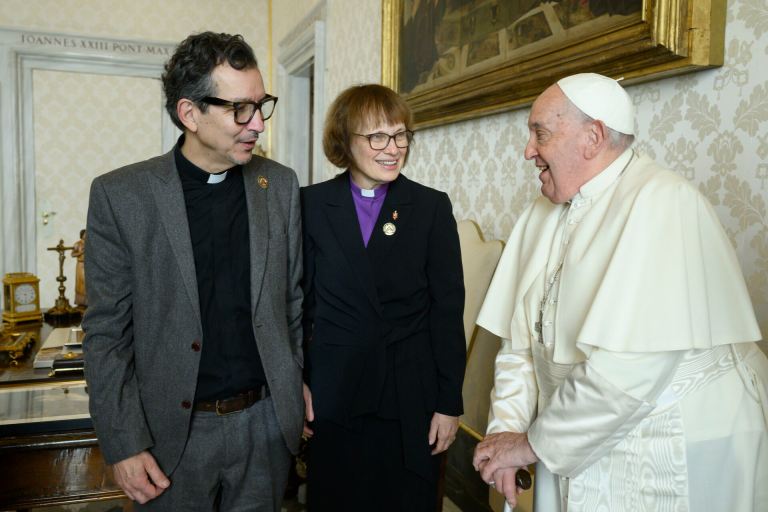
The results of these emphases at the 1881 Ecumenical Methodist Conference can be seen in the development of the World Methodist Council’s work. The Council has promoted and supported mission and evangelism through the establishment of World Methodist Evangelism in 1971 to train and resource “Christ followers to share their faith in the context of today’s realities.” The Oxford Institute of Methodist Theological Studies was first convened in 1958 to foster sharing and learned theological discourse among Methodist scholars. The International Association Methodist Schools, Colleges, and Universities connects and empowers leaders of Methodist educational institutions around the world. Additionally, the Council maintains permanent presence in Geneva, Rome, and Jerusalem to foster unity, dialogue, witness, and solidarity.
 Methodist Ecumenical Office Rome