A statement from the Anglican Communion, the Lutheran World Federation, the World Communion of Reformed Churches, and the World Methodist Council
In the wake of escalating conflict in the Middle East and ongoing warfare impacting places like Ukraine, Sudan, Gaza and Myanmar, four global Christian communions have issued the following statement:
As global Christian communions, the Anglican Communion, the Lutheran World Federation, the World Communion of Reformed Churches, and the World Methodist Council, representing hundreds of millions of Christians across the world stand together in deep sorrow and unwavering resolve. We are witnessing the devastating impact of violence and war on countless individuals and communities around the world. In response, through our ongoing work and the ministries of our churches and partners on the ground, we are engaged in concrete actions of solidarity, humanitarian aid, and peacebuilding.
The recent escalation of conflict and intensified war in Iran and the Middle East adds to the distressing list of ongoing violent conflicts and wars including those in Ukraine, Sudan, Gaza, and Myanmar.
We are profoundly dismayed at the international community’s failure to prevent these tragedies. Instead of pursuing the difficult but necessary paths of diplomacy and dialogue, nations have increasingly resorted to military solutions, pouring vast amounts of resources into arms rather than into peace processes and humanitarian assistance for the vulnerable.
Justice demands that perpetrators of violence and the individuals and countries responsible for atrocities and violation of international law must be held accountable for their actions. The victims of their actions must be heard, and their dignity, rights, lives, and livelihoods must be protected.
In the current global context, ‘Peace is no longer sought as a gift and a desirable good in itself… Instead, peace is sought through weapons as a condition for asserting one’s own dominion.’ We echo here the words of Pope Leo as he addressed the Vatican’s diplomatic corps earlier this year. If the basis of peace is self-interest, this gravely threatens the rule of law, civil coexistence, and the ability of states to come together.
As old wars rage on unabated, new ones arise. The world is approaching a dangerous tipping point – a time when violence becomes the norm and death and suffering of people and communities condoned.
We reaffirm our strong commitment to peace, in a world increasingly amassing arms, and accepting destructive conflict as inevitable. We envision a world where peace is cherished and actively cultivated, grounded in our shared values of dignity and worth of each person, and the equal rights of all people and nations, large and small, with justice and respect for international law.
The peace the world longs for is not only the absence of wars, nor one which is enforced by coercion and dominance. It is not to be brokered by the highest bidder. Peace is not for sale. It is a peace which includes justice and which transforms our collective culture. Peace is the presence of justice, dignity, and flourishing for all God’s children.
We further reaffirm our commitment to and support of multilateralism – countries of the world pursuing a common goal of justice, peace and sustainability, based on principles of inclusivity, equality, and cooperation. This is the foundational role of the United Nations – to enable encounters and dialogue across all the nations of the world – and it is crucial to ushering in peace and justice. This path of diplomacy, mediation, and international law is sadly too often undermined.
Whilst it is timely to renew and reform the international multilateral structures and mechanisms of global governance, we call for this to be done in a spirit of re-creation and rediscovery, not of jaded cynicism. This approach will allow multilateralism to regain the strength needed for undertaking its role of encounter and mediation.
In our faith tradition, we find ourselves in the period of Lent and the approach to Easter, in a cycle of reflection which includes suffering, fear and the destruction of what is good. Our Christian faith teaches us that such times can be faced with courage and integrity; the way is not easy, but renewal and recreation are possible.
We call on national governments, regional intergovernmental bodies, the United Nations, international organizations and all stakeholders to invest in peace, not war.
We call for greater support towards humanitarian aid and protection of affected communities and for strengthening of grassroots peacebuilding, recognising the critical role of local communities, civil society, and faith-based organisations in preventing conflict and rebuilding societies.
As churches, we pledge to be relentless advocates for transformative peace. We will continue to pray for the victims of war, to advocate for justice before political leaders, and to serve those affected by conflict through our diaconal ministries. We commit to educating our members on the ethics of peace and challenge the narratives of hate and enmity within our society.
Signed:
The Rt Revd Anthony Poggo
Secretary General of the Anglican Communion
The Revd Dr Anne Burghardt
General Secretary of the Lutheran World Federation
The Revd Philip Vinod Peacock
General Secretary of the World Communion of Reformed Churches (WCRC)
The Revd Dr Reynaldo Ferreira Leão Neto
General Secretary of the World Methodist Council
Download the statement: A call for renewed efforts towards the ‘gift of peace’ for all (337 KB)


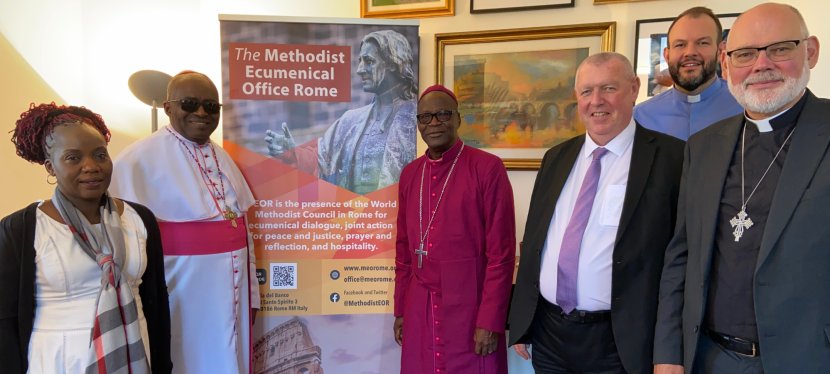
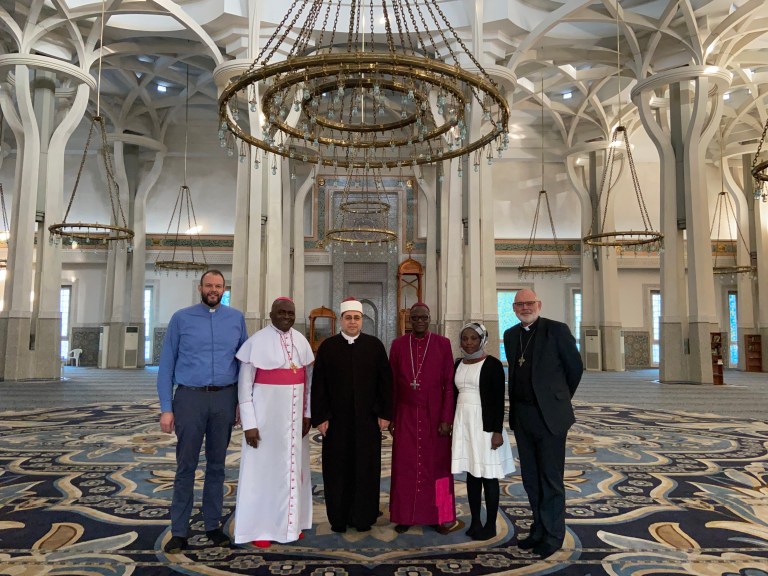

 Methodist Ecumenical Office Rome