The Methodist-Roman Catholic International Commission (MERCIC), formally called the Joint International Commission for Dialogue between the World Methodist Council and the Roman Catholic Church, held a plenary commission meeting in hybrid format from 30 October through 3 November 2023. Due to a late change in meeting location, some commission members were able to gather in Rome at the Istituto Maria Bambina near St. Peter’s Square, while others joined the proceedings online. The plenary meeting was the second session of the 12th round of the dialogue.
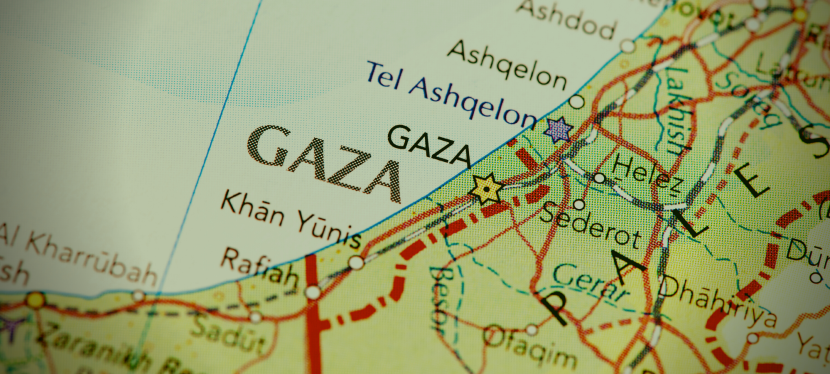
The meeting was originally scheduled to meet at the Tantur Ecumenical Institute in Jerusalem, but the deadly Hamas terrorist attacks and devastating Israeli military action in Gaza prevented the commission members from gathering in Jerusalem. The Commission held two prayer services for peace in Israel and Palestine during its meeting.
The Commission welcomed the Rev. Prof. Blanches de Paula as a new Methodist commission member. Prof. de Paula is a minister of the Methodist Church in Brazil and a professor of Practical Theology at the Methodist University of Sao Paulo. The Commission is comprised of 16 members – 8 Catholic members appointed by the Dicastery for Promoting Christian Unity and 8 Methodist members appointed by the World Methodist Council. Prof. de Paula replaced Bishop Lizette Gabriel Montalvo of the Methodist Church in Puerto Rico, who resigned due to increasing demands on her episcopal office.
In light of the reduced number of members physically present, the Commission had only one official public engagement during the 2023 plenary. The members who were present in Rome were received by H.E. Cardinal Kurt Koch, Prefect of the Dicastery for Promoting Christian Unity, at the Dicastery’s offices, in order to brief him about the Commission’s work on unity and mission as well as to discuss with Cardinal Koch the themes of unity and diversity in the church.
The commission co-chairs – Rev. Prof. Edgardo Colón-Emeric and Bishop Shane Mackinlay – led the Commission in its opening prayer service, using An Ecumenical Liturgy of Repentance and Reconciliation. The liturgy was published by the Commission in God in Christ Reconciling: On the Way to Full Communion in Faith, Sacraments, and Mission in May 2022 as a resource for Catholics and Methodists in their pursuit of reconciliation and unity.
The Commission received updates on the first session of the 16th Ordinary General Assembly of the Synod of Bishops of the Catholic Church, which met from 4-29 October 2023 in Rome under the theme of Synodality. Two commission members – Bishop Shane Mackinlay of Australia and Prof. Catherine Clifford of Canada – are members of the Synod. Prof. Clifford and Bishop Mackinlay reported on their synodal experiences with special attention to the ecumenical implications of the Synod’s work. Additionally, a MERCIC working group reviewed the ecumenical/Christian unity responses submitted from around the world during the Synod’s National Phase and brought a report and summary to the commission plenary.
The Commission received several draft reports and papers from the Commission’s working groups. The 12th round of dialogue is focused broadly on the theme of unity and mission and seeks to build upon the Commission’s continuous work since 1967. With the 1700th anniversary of the Council of Nicaea in 2025, the Commission resolved to publish an updated version of Together To Holiness, a synthesis document of the Commission’s work from 1967-2006, adding further material from the Commission’s three subsequent reports from 2011, 2016, and 2022. This revised synthesis document will redemonstrate the unity already shared by Methodists and Catholics through their common baptism and shared Christian faith. In light of the Church’s calling to preach the Good News, the Commission also held long discussions on the theme of communion and explored the nature and meaning of unity and diversity within the Church. Several papers on models of unity, drawing from the experiences of Catholics and Methodists, were presented, serving as tools to explore important issues of communion. Furthermore, the Commission held discussions on the principles of dialogue, examining what principles Methodists and Catholics must hold in common as they approach greater and fuller unity.
From the plenary, the Commission through its Executive Committee set forth a plan to chart the Commission’s work during the next years. The plan calls for further work on the context of mission and unity, the Missio Dei and ecclesiology, and mission and its practical implications.
The Commission’s next plenary session is scheduled for 21-29 September 2024 in Seoul, South Korea.
The Commission is made up of:
Methodist Members
Rev. Prof. Edgardo A. Colón–Emeric (Co-Chair), USA
Rev. Matthew A. Laferty (Co-Secretary), Methodist Ecumenical Office, Rome
Dr. Jung Choi, Korea/USA
Rev. Prof. Blanches de Paula, Brazil
Prof. Geordan Hammond, United Kingdom
Rev. Prof. Glen O’Brien, Australia
Rev. Dr. Hermen Shastri, Malaysia
Prof. Lilian Cheelo Siwila, Zambia/South Africa
Catholic Members
Bishop Shane Mackinlay (Co-Chair), Australia
Rev. Martin Browne OSB (Co-Secretary), Dicastery for Promoting Christian Unity, Rome
Prof. Catherine E. Clifford, Canada
Rev. Prof. Gerard Kelly, Australia
Sr. Prof. MarySylvia Nwachukwu DDL, Nigeria
Rev. Prof. Daniel Franklin Pilario CM, Philippines
Rev. Prof. Jorge Scampini OP, Argentina
Dr. Clare Watkins, United Kingdom