NEWS – Blessed are the Peacemakers

During March 2022 the World Methodist Peace Prize was presented in Europe three times. In this article Bishop Rosemarie Wenner (Geneva Secretary of the World Methodist Council) shares about the recipients of this prize and challenges Methodists in Europe to consider what it means to be peacemakers.

Peace is probably one of the most used words since the invasion of the Russian Forces into Ukraine started on February 24. Politicians, people of faith in all religions, and of course ordinary people discern how to stop the war, pray for peace and seek to work towards peace. Where are we – the people called Methodists – in these debates, prayers, and actions?

We claim to belong to those who are peacemakers. We refer to John Wesley, who, although he was not a pacifist, looked upon war as against all “reason and virtue”, against all “common sense and common humanity.” (The citation is taken from a treatise of John Taylor that John Wesley edited 1757: “The Doctrine of Original Sin According to Scripture, Reason, and Experience”). We affirm, what was stated in the First Assembly of the World Council of Churches 1948, that war is “contrary to the will of God”. And we confess in the Social Affirmation of the World Methodist Council: “We commit ourselves individually and as a community to the way of Christ: to take up the cross; to seek abundant life for all humanity; to struggle for peace with justice and freedom; to risk ourselves in faith, hope, and love, praying that God’s kingdom may come.”

What does all of this mean now in the face of a terrible war middle in Europe?

During March 2022, the World Methodist Council presented its Peace Award to three recipients. What a coincidence and what an opportunity to reflect on the calling to be peacemakers. March 4, Millicent Yambasu, the spouse of the late United Methodist Bishop John K. Yambasu, received the Peace Award at the Annual Conference in Bo, Sierra Leone. Bishop Yambasu was posthumously honored for his commitment to overcome poverty, to stay with his people in difficult times like the Ebola crisis and to work for peace within Sierra Leone and beyond. March 13, a second United Methodist was honored in Tallin, Estonia: Rev. Olav Pärnamets, a retired clergy and former superintendent, served with courage and creativity when Estonia was under Soviet occupation and continued to build bridges after 1990: Rev Pärnamets led a conference that serves all, regardless of nationality or language group. There are Russian speaking congregations within the UMC in Estonia, which testifies: “There is neither Jew nor Gentile”, neither Estonian nor Russian… “all are one in Christ Jesus.”

March 18, I was privileged to take part in a celebration in Sheffield, UK, that was originally scheduled for March 20, 2020. It could not take place since then because of the Pandemic. We presented the 2018 WMC Peace Award to Rev. Inderjit Bhogal from the Methodist Church in Britain. He was honored because of his livelong commitment to peace, to inter religious dialogue and to create “sanctuaries” – safe places, where refugees and migrants are treated with dignity and love.

Inderjit Bhogal’s speech at the ceremony was a strong plea to act out of a heart of peace towards everybody. He invited us to cooperate with him “to call leaders of nations, and all faiths and ideologies to come together and work with each other 1)to build a world without war, a world where we “learn war no more” 2) to build a world without weapons of war, non-nuclear, where we learn together to resolve conflict with the art of nonviolence, and invest in instruments of healing not harming, and foster reconciliation 3) to build a world that learns the art of sanctuary, which is warm welcome, protective hospitality and safety, especially with the most vulnerable.”

This goes far beyond the help for refugees from the Ukraine, as important it is to protect them. All those who suffer from war, conflicts, violence and poverty, no matter where they might come from and what skin color they might have, need our support. It also goes far beyond our engagement to pray for peace, as important these prayers are. We must also work for systemic changes. Inderjit Bhogal spoke of the need to divert money and investment from war to the ending of poverty and tackling climate change and pollution, since he sees poverty as the primary form of violence and cause of conflict, as well as the biggest killer. Learning the art of sanctuary is a good starting point for those who wish to be peacemakers.

A sanctuary is a safe place for all who need support and fellowship, a place where meals and stories are shared, a place where differences are received as means to grow in love, a place where God is honored because those present see God’s image in the face of the other, as strange as this person might be.

Several gospel stories come to my mind: Jesus, engaging in a theological conversation with the woman at Jacob’s well; Jesus, teaching his disciples to share a few loafs of bread and some fish so that are all fed; Jesus, washing the feet of his disciples, including Judas, who soon betrayed him… – By his example Jesus teaches us the art of sanctuary.

As Methodists, we have a special gift to share in this effort: We are interwoven in connections that transcend national boundaries. The network within the European Methodist Council is more then a structure. We engage in personal relationships and church partnerships to support one another especially in such a severe crisis like the war in the Ukraine. Are we ready to generously make use of our connection, not just to support Methodist peers, but to expand the network of care and solidarity?

The long list of the recipients of the World Methodist Council Peace Prize can be found on www.worldmethodistcouncil.org. These people give witness to a global network of peacemakers. None of these persons worked alone. They were and are all part of a community of saints that inspired, nourished, and supported them, as much as they encouraged others. Let us follow their examples as we follow Christ Jesus, for “he is our peace; in his flesh he has…broken down the dividing wall, that is, the hostility between us.” In Christ, we are “no longer strangers and aliens, but you are citizens with the saints and also members of the household of God.” (Ephesians 2, 14 and 19, NRSV)                                       

Bishop Rosemarie Wenner
Geneva Secretary
World Methodist Council

5 April 2022

ENCOUNTER – Methodist-Anglican Study Group Visits Vatican Peace and Justice Department on 16 March

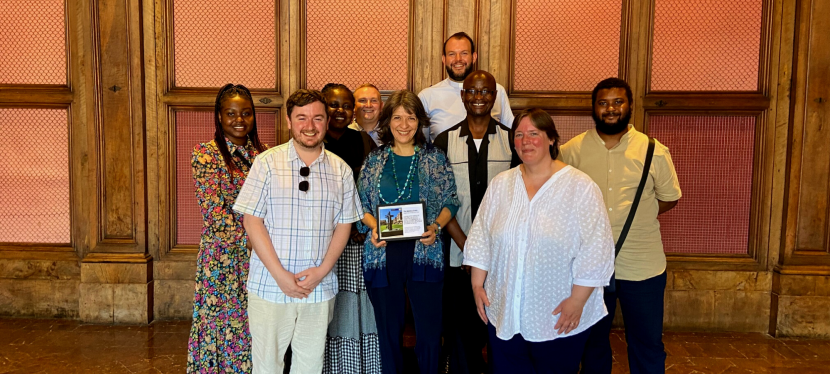
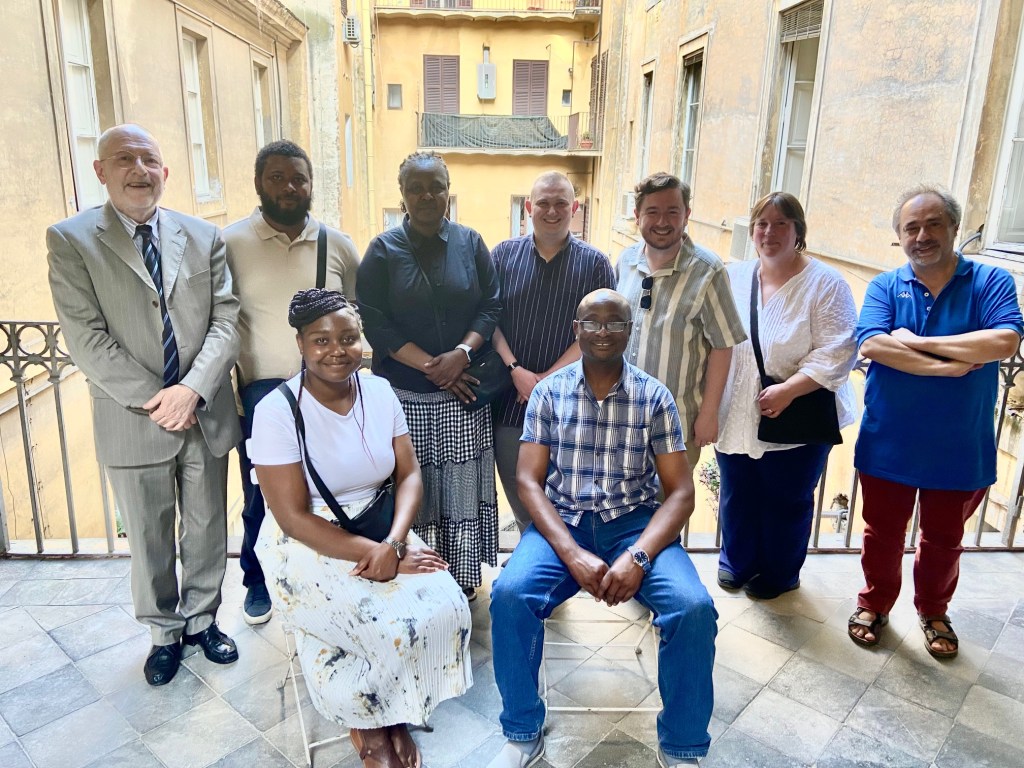
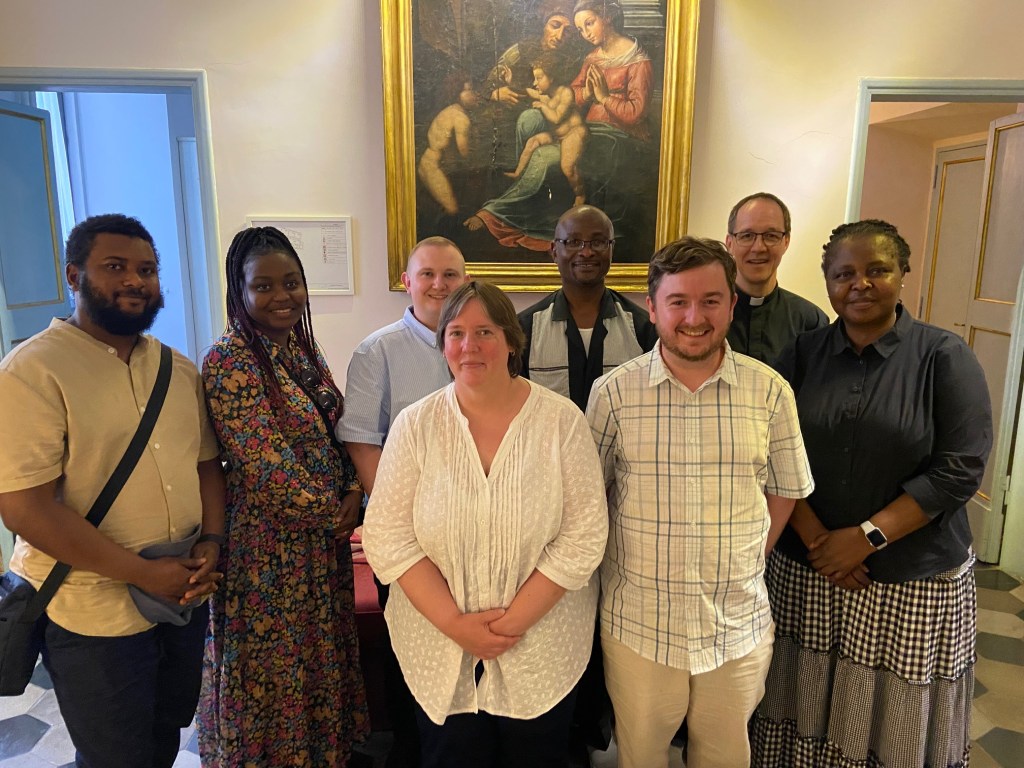
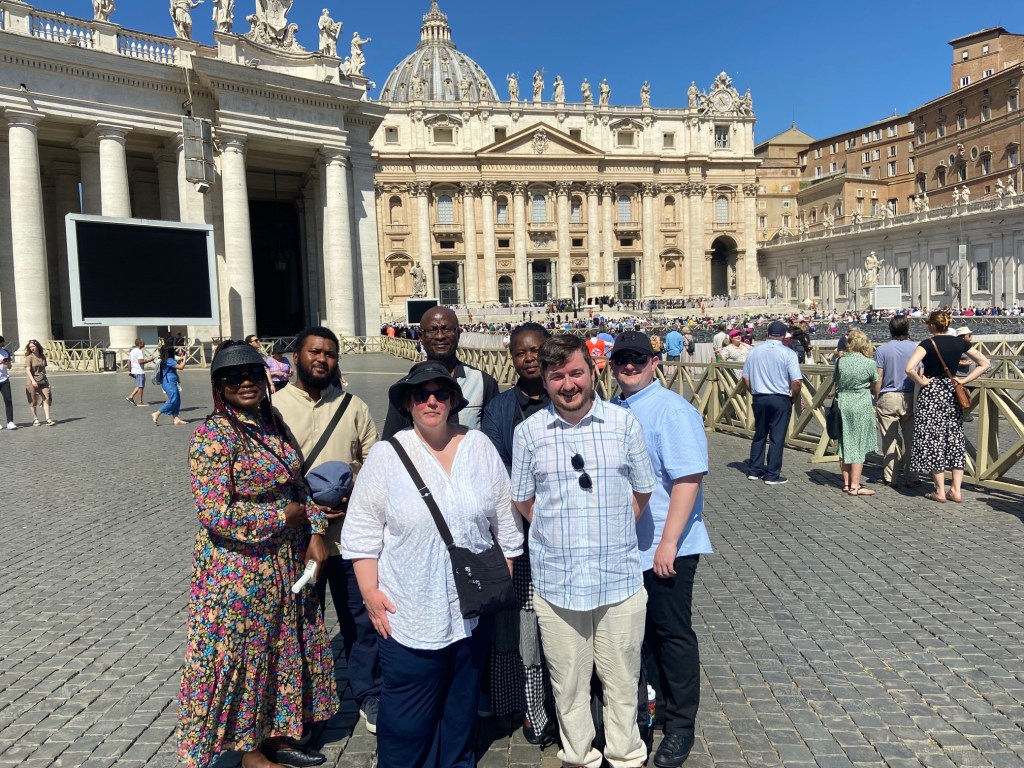
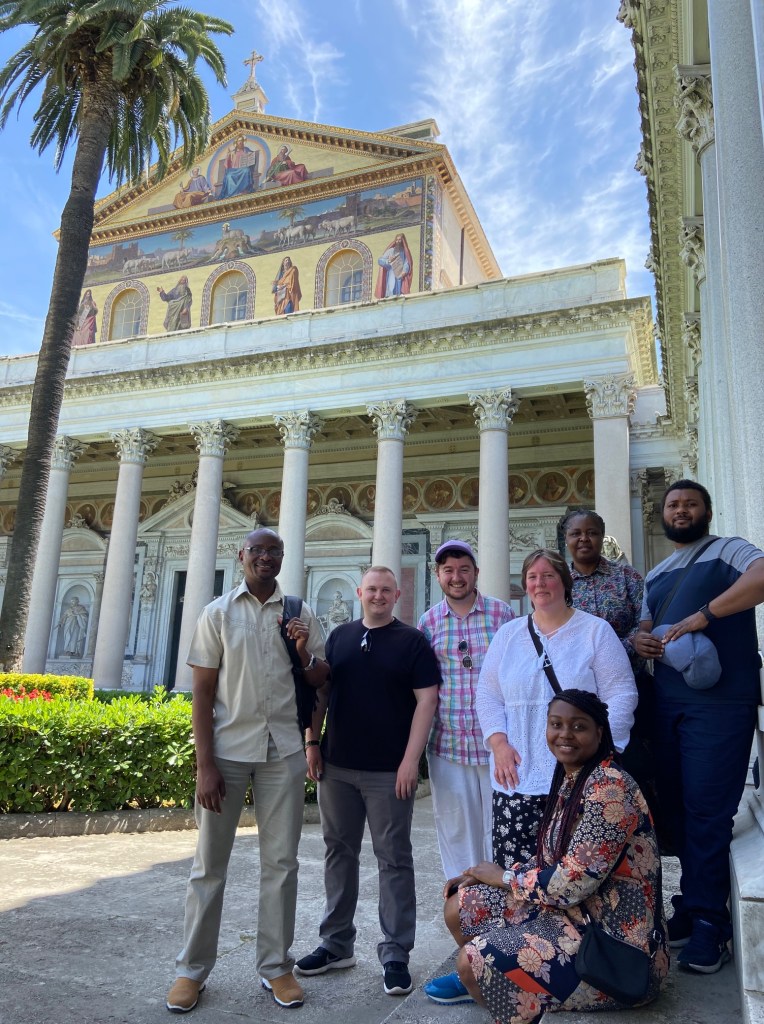
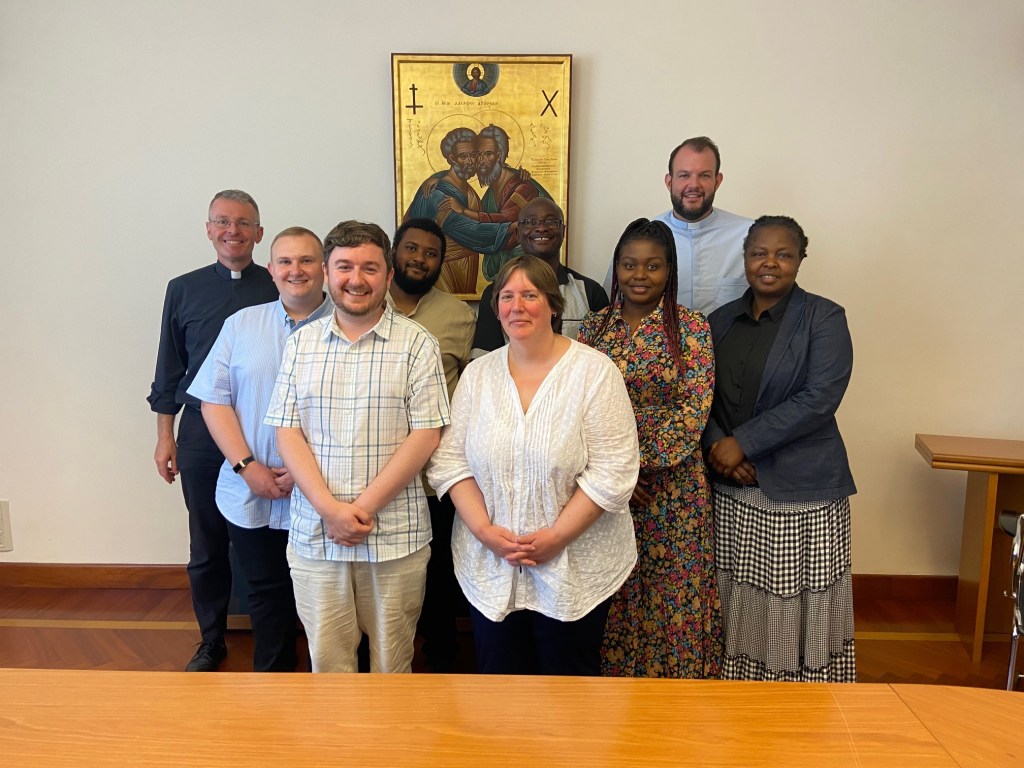
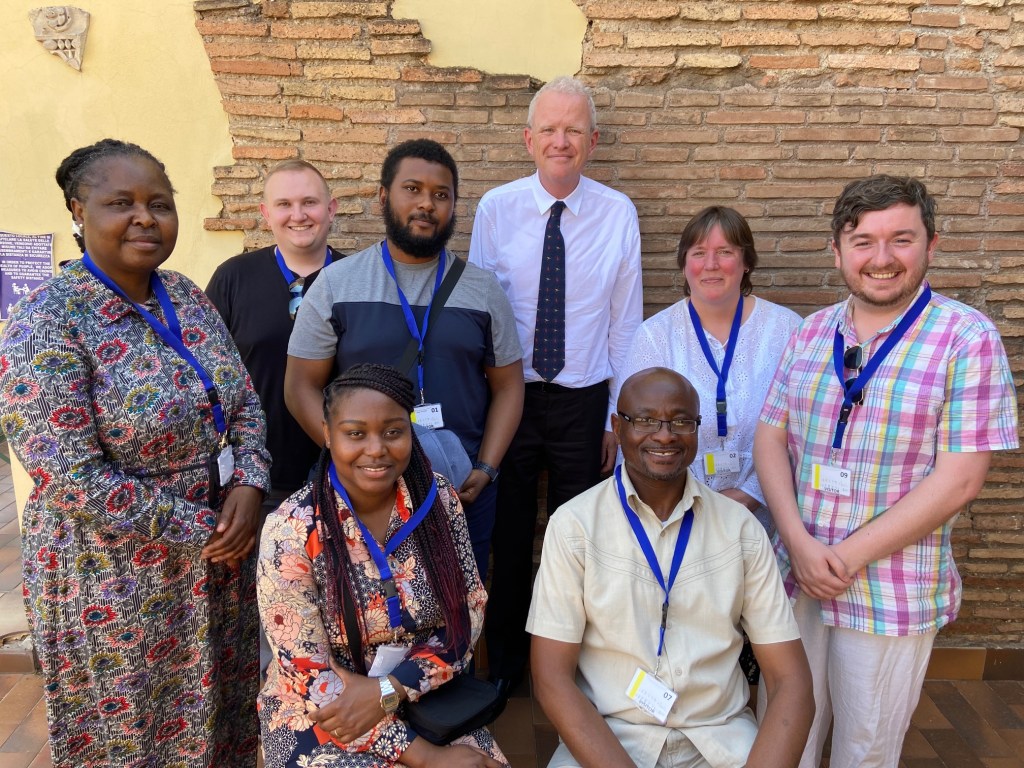
A joint Methodist-Anglican study group from Chester, United Kingdom, visited the the Dicastery for Promoting Integral Human Development, the Vatican’s peace and justice department, on Wednesday, 16 March 2022 to learn about the Vatican’s social justice programs. The group was co-led by the Revd Dr. Tim Macquiban, former MEOR director (2014-2019), and the Revd Canon Jane Brooke, vice dean and canon missioner of the Chester Cathedral.

The Rev. Matthew A. Laferty, director of the Methodist Ecumenical Office Rome, escorted the group.

The Methodist Ecumenical Office Rome arranged the visit.

NEWS – Ash Wednesday Statement on Conflict in Ukraine by Bishop Ivan Abrahams

Bishop Ivan Abrahams, general secretary of the World Methodist Council and co-chair of the Methodist Ecumenical Office Rome, issues the following statement on the conflict in Ukraine:

Seven days after Russian troops crossed into Ukraine, we gather with ecumenical partners and all people of goodwill to remember political leaders, soldiers, and civilians caught up in the current conflict. We pray that God may “guide our feet into the way of peace.” (Luke 1:79)

The World Methodist Council supports Pope Francis’s peace initiative to mediate the conflict between Russia and Ukraine after recent talks failed to lead to a ceasefire. We note that the Pontiff called on leaders of both countries “to examine their consciences seriously before God, who is the God of peace and not of war.” 

Methodists are committed to peacebuilding and have a long tradition of solidarity with all who challenge violence and injustice.

May we read the signs of the times and interpret them in the light of the gospel.

EVENT – World Methodist Council, 3 Other Christian Communions Condemn Russian Military Invasion in Ukraine and Call for Prayer on 2 March

Four Christian World Communions are strongly condemning the advance of the Russian military into Ukraine and the assault that began on the night of 24 February 2022. They call for Russian troops to be brought back to Russia and an immediate end to the conflict. “Peace must prevail,” they insist. 

The Lutheran World Federation (LWF), the World Communion of Reformed Churches (WCRC), the Conference of European Churches (CEC), and the World Methodist Council (WMC) are calling for prayers of peace for the people of Ukraine and the region.  

They have issued an invitation to an online prayer service on Ash Wednesday, 2 March at 17.00 CET. The service will bring together Christians from Ukraine and other parts of the world, seeking peace and an end to the ongoing conflict.  

“Jesus calls us to be messengers of hope who work for peace. As Christian churches we therefore call for an immediate de-escalation of this conflict, so that the lives, human rights, and dignity of people in Ukraine are protected,” said LWF General Secretary Rev. Anne Burghardt. 

“This is a time for churches in Europe and globally to form a strong alliance of solidarity with people who fear the impact of war in Ukraine. This is a time to gather in prayer for people who possess the power to make decisions that will save lives and make peace possible,” said CEC General Secretary Dr Jørgen Skov Sørensen. 

“As the Scriptures encourage us to turn away from evil and do good, to seek peace and pursue it (1 Peter 3:11), we consider such an unprovoked attack as evil, and strive to do all we can to stand against it—while also preparing to assist those impacted by it,” said the WCRC Collegial General Secretariat (composed of Hanns Lessing, Philip Peacock, and Phil Tanis). 

“Despite what is happening in Ukraine I still believe that the international community can make a difference as we collectively work for peace in the region,” said WMC General Secretary Bishop Ivan Abrahams. 

In the call to prayer for the people of Ukraine and the region, the four Christian communions note the military assault threatens the lives of Ukrainians, as well as peace throughout Europe and beyond. “The crisis is urgent and requires the attention and solidarity of the global Christian community.” 

The LWF brings together 148 Lutheran churches representing over 77 million Christians across the globe. The WCRC is comprised of more than 230 Congregational, Presbyterian, Reformed, United, Uniting, and Waldensian member churches representing 100 million Christians. The Conference of European Churches is a fellowship of 114 churches from Orthodox, Protestant and Anglican traditions from across Europe. The World Methodist Council encompasses 80 member churches with 80 million members on six continents.